
Fabric & Craft
The Architecture of Indian Textiles: 11 Indigenous Fabrics Defying the Synthetic Era
Indian textiles were never only heritage crafts. They were engineered, loom by loom, to vent heat, hold warmth and outlast the synthetic era.
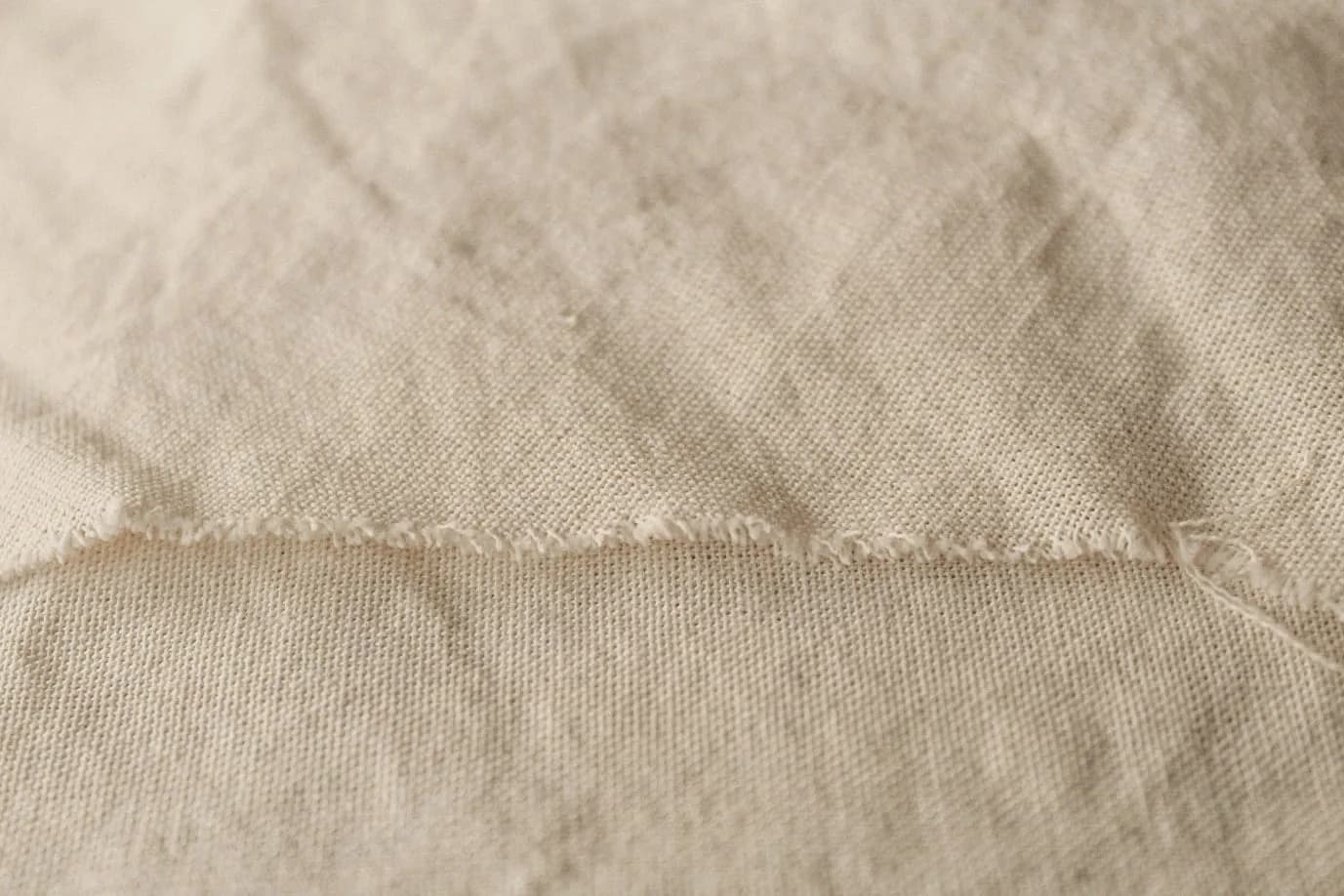
India is a vast country, and its climate changes across its length and breadth. There is blistering dry heat in Kutch, suffocating humidity in Bengal and biting cold in the Himalayan hill stations, while the Thar desert is scorching by day and freezing by night. The men who lived in these regions had no air-conditioning, transport was poor, and clothes could not simply be brought in from foreign lands. Nor were there petroleum-based plastics to stabilise their threads. So the weavers of each region made their own textiles from local materials, engineered to cope with the climate around them.
When we stop seeing Indian textiles only as heritage crafts and look at them through the lens of textile engineering, it becomes clear they were never merely art pieces. They were made for daily use, and made to last. Over centuries, artisans mastered the geometry of the loom to create fabrics that vent heat, insulate against cold, dry quickly after monsoon rain and survive brutal wear and tear.
The modern Indian apparel industry has largely traded these fabrics for machine-made, plastic-based synthetics, for the sake of high margins and mass production. Clothes are now abundant all year round, but they don’t last as long, and comfort is the first thing to be compromised.
Here is the technical anatomy of eleven indigenous Indian fabrics: Kala cotton, Mangalagiri, Jamdani, Khadi, Ajrakh, Ikat, Chanderi, Mashru, Eri silk, Tussar silk and Bhujodi. Together, they prove that nature and good engineering outlast plastic.
The Breathable, High-Tension Cottons
The first five are built for heat: cotton cloths spun, woven and finished to breathe, absorb sweat and keep their structure through years of wear.
Kala Cotton: The Rain-Fed Cotton of Kutch
Kala cotton is an indigenous, old-world cotton native to the harsh, unforgiving landscape of Kutch in Gujarat. It is one of the last old-world cotton varieties still grown in India, and it has never been genetically modified. It is entirely rain-fed and naturally pest-resistant, the opposite of most commercial cotton, which is heavily irrigated, genetically modified and dependent on chemicals.
The fibre is short, coarse and very dense. Woven, it makes a rugged, high-tension fabric that is still lightweight. Shirts made of Kala cotton hold their own physical space: the density keeps them strong and true to their original shape without feeling stiff. Kala cotton doesn’t break down with wear; it softens organically over years without losing its fundamental architecture.
Mangalagiri Cotton: Crisp Enough for the Office
Mangalagiri cotton comes from the town of Mangalagiri in Andhra Pradesh, and it is perhaps the best replacement for the modern synthetic corporate shirt. The textile is defined by mathematical precision and a strict absence of woven designs on the main body of the cloth.
Being 100% pure cotton, Mangalagiri is hydrophilic: it draws moisture and heat away from the body, which makes it comfortable in sweltering weather. The fabric has a dense, paper-like crispness that naturally mimics a properly starched dress shirt, so it suits the office as well as the heat. The man wearing it looks composed, commanding and professional.
Jamdani: The Muslin Called Woven Air
Jamdani is a fine muslin textile that originated in the Narayanganj district near Dhaka, in undivided Bengal, during Mughal rule. After Partition, many of its weavers migrated to West Bengal, where they continue to weave it and keep the tradition alive.
Bengal is intensely humid in the summer months, and heavy silk brocades are unbearable in that weather. So the weavers of the region created a fabric that is extremely light and highly ventilated, allowing the royal courts to bear the humid heat of the Ganga-Brahmaputra delta while still looking authoritative. Its lightness and translucent muslin base earned Jamdani the name woven air.
It is one of the most labour-intensive forms of handloom weaving, built on a complex supplementary-weft technique. Instead of printing a pattern on top of finished fabric, which adds weight and seals the pores of the cloth, the weaver inserts the design threads by hand into a sheer, gossamer-thin base, directly on the loom. The pattern is woven into the negative space of the cloth itself. The result is astonishingly light and breathable, ideal for humid weather.
Khadi: Spun and Woven Entirely by Hand
Khadi is cloth that is both hand-spun and hand-woven, with no mechanical or industrial step anywhere in the process. That is what sets it apart from every other fabric, and from ordinary mill cotton: khadi is usually made of cotton, but cotton only becomes khadi when the yarn and the weave are both made by human hands. The word comes from khaddar, the old name for hand-spun, hand-woven cloth.
Khadi holds a significant place in India’s freedom movement. During the Swadeshi movement, Indians were urged to give up machine-made foreign textiles in favour of khadi, and Mahatma Gandhi promoted it to support Indian spinners and weavers and to shun British goods.
Hand-spinning leaves natural, microscopic irregularities in the yarn, known as slubs. These aren’t flaws. The tiny air pockets trapped in the uneven yarn act as thermoregulatory vents, so the fabric breathes freely and keeps the body cool in extreme heat, yet holds warmth when the temperature drops. Khadi also has high tensile strength: like heavy raw denim, it gradually adapts to the shape and movement of the person wearing it, and it doesn’t tear easily.
Ajrakh: Resist-Printed in Kutch and Sindh
Ajrakh is made by the Khatri community of Kutch and Sindh. These regions are arid and extremely hot, and Ajrakh is made to stay cool in the heat, warm in cold winds, and to withstand the salty air of the Rann of Kutch. The base is usually a dense cotton, though modal is also used today.
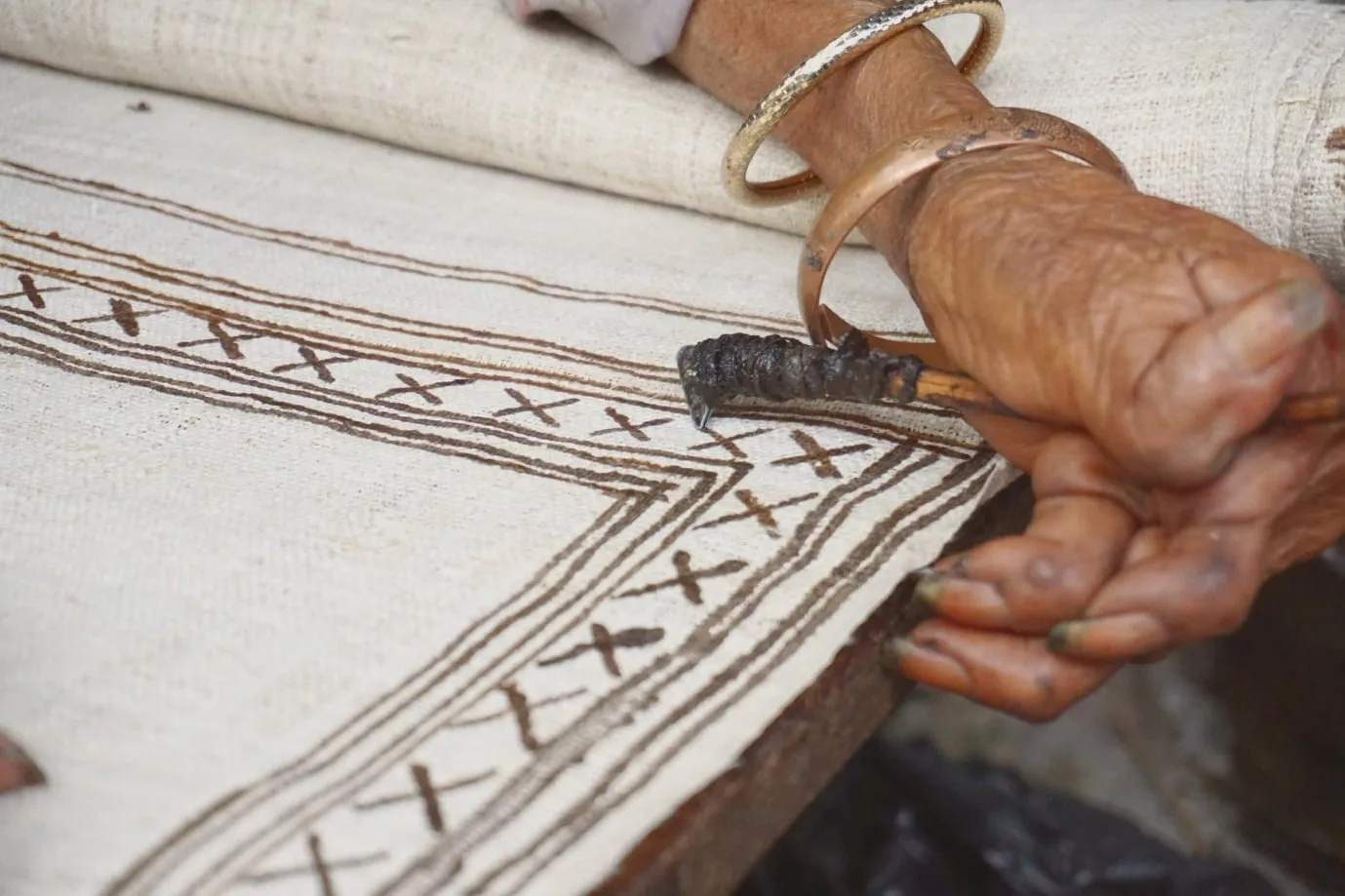
Making a single piece of Ajrakh takes weeks: repeated stages of washing, mordanting, resist-printing with pastes of lime and camel dung, and dyeing with madder and indigo. The cotton has to be incredibly robust to survive the repeated boiling and washing. The finished cloth is deeply saturated with natural dyes, which leave the cotton breathable rather than sealed.
We follow the Ajrakh printing process block by block in our beginner’s guide to Indian handloom.
Complex Weaves and Hybrids
Once breathability was mastered, weavers went further, creating textiles precisely engineered for function. These fabrics use the interaction between different fibres and dyes to make cloth that performs a specific mechanical job.
Ikat: Single Ikat, Double Ikat and the Mathematics of the Loom
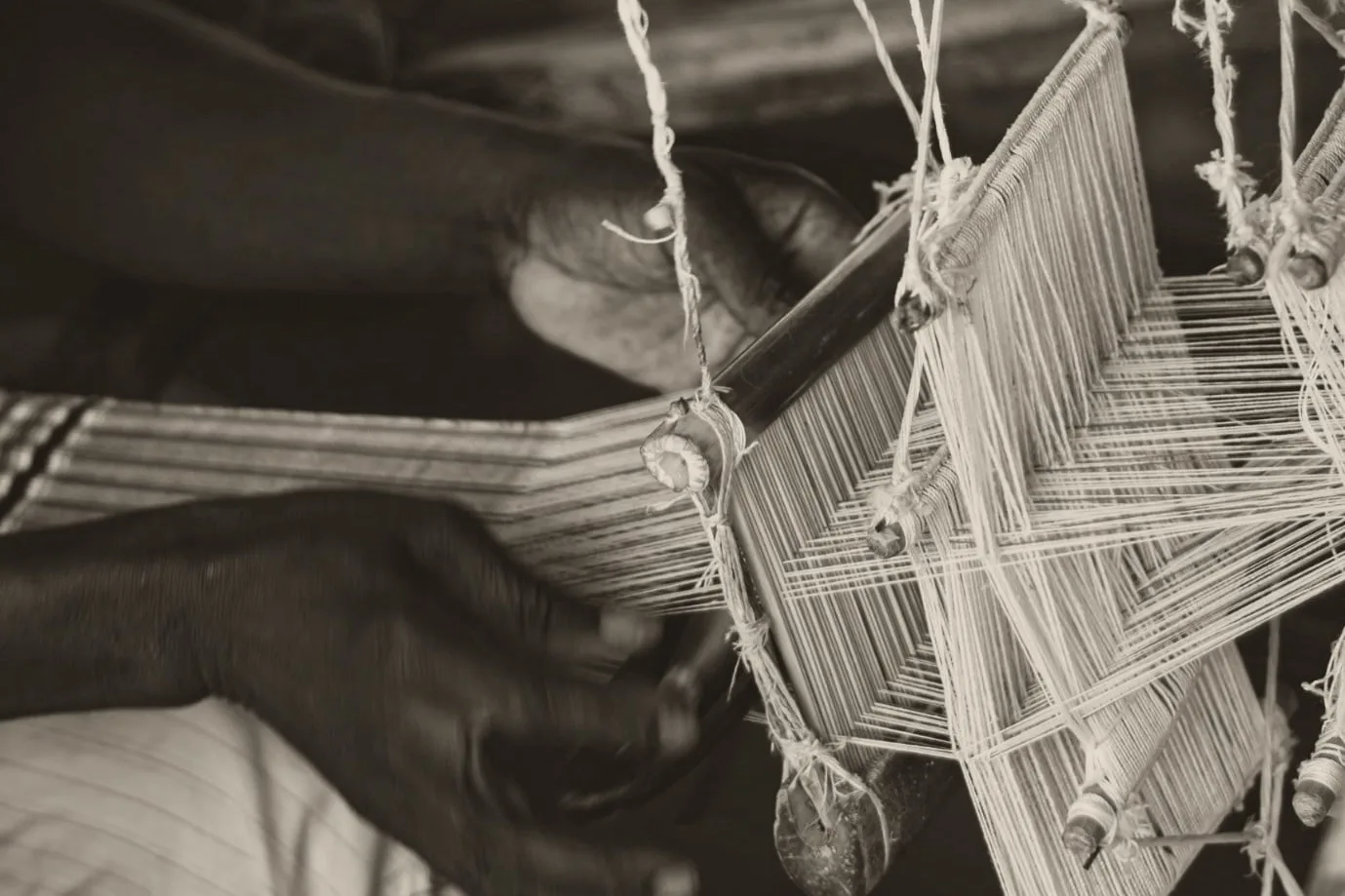
Ikat is a masterclass in mathematical precision. In standard weaving, pre-dyed threads are simply crossed over one another. In Ikat, the yarn itself is resist-dyed before it is mounted on the loom. The weaver calculates the exact tension, alignment and stretch of thousands of individual threads, so that the dyed sections line up to form sharp geometric patterns as the fabric is woven. The finished cloth looks almost identical on the front and the back.
Because the dye penetrates to the core of the yarn rather than sitting on the surface, the colour doesn’t rub away with wear, giving the fabric remarkable resistance to abrasion.
India has several Ikat traditions. In single Ikat, only the warp or only the weft is resist-dyed; in double Ikat, both are. Pochampally in Telangana mostly produces single Ikat in silk and cotton, known for its sharp geometry. The Patola of Patan, in Gujarat, is a double Ikat. Sambalpuri Ikat from Odisha is a weft Ikat, known locally as bandha and loved for its curved motifs.
Chanderi: Silk, Cotton and Zari from Madhya Pradesh
Chanderi is named after the town of Chanderi in Madhya Pradesh, and it combines silk and cotton into a fabric that is nearly weightless yet structurally sound. In the traditional weave, raw silk, pure cotton and metallic zari are woven together in a specific ratio, so that the fabric absorbs moisture well while keeping a subtle, natural sheen.
Chanderi uses silk yarn that has not been degummed. Leaving the natural sericin, or silk gum, on the fibre gives the fabric its distinct, papery crispness. It is as light as a feather and doesn’t cling to the body; it hovers around the skin, which makes it an ideal summer textile. Chanderi also carries a Geographical Indication (GI) tag, which protects the heritage of the town and safeguards its weavers.
Mashru: The “Permitted” Silk-and-Cotton Weave
Mashru finds mention in the Ain-i-Akbari, the administrative record of Emperor Akbar’s court in the 16th-century Mughal Empire. It is a brilliant historical solution to a strict material problem, and arguably one of the oldest examples of dual-layered cloth.
Islamic law of the time forbade men from wearing pure silk directly against the skin. To solve this, weavers in Gujarat and the Deccan created Mashru, a fabric woven with a silk warp and a pure cotton weft. The word mashru means “permitted”, from the Arabic mashru; it is also linked to the Sanskrit misru, meaning “mixed”.
Through a specific satin-weave structure, the silk threads float almost entirely on the outer surface, giving the cloth a rich, lustrous and weighty exterior. Only the breathable cotton touches the skin on the inside, where it soaks up moisture and keeps the body cool. It is a remarkable piece of craftsmanship: visual gravity on the outside, comfort on the inside.
Wild Silks and Natural Insulators
Where the climate calls for insulation, the garment industry turns to synthetic fleece, acrylic and heavy polyester blends. These materials trap sweat and shed hundreds of thousands of microplastic fibres into the water supply with every wash.
The indigenous alternatives rely on the raw, unpolished strength of wild fibres and heavy-duty loom techniques to provide warmth and structure without polluting the environment.
Eri Silk: The Ahimsa Silk of Assam
Eri silk, also called endi, is an indigenous silk from Assam in north-east India. It is known as Ahimsa silk or peace silk because, unlike commercial mulberry silk, where the silkworm is boiled alive inside its cocoon to extract one continuous shiny thread, Eri lets the moth hatch and leave the cocoon naturally. The opened cocoon is then spun like cotton or wool rather than reeled, which fundamentally changes the structure of the fibre.
The history of Eri silk is linked to the 16th-century Neo-Vaishnavite movement in Assam, led by the saint-reformer Srimanta Sankardeva. Sankardeva didn’t only preach a philosophy; he reshaped the social and economic fabric of the region by founding satras, Vaishnavite monasteries. Because Eri can be harvested without killing the silkworm, it sat comfortably with the movement’s strict principles of non-violence and the religious integrity of its monks and followers.
Eri lacks the slick, high-shine finish of standard silk. Instead, it has a dense, matte, almost wool-like texture and a heavy drape, which makes it best suited to unstructured jackets and heavy overshirts. It is also a remarkably efficient thermal regulator, keeping the body warm in winter and cool in summer.
Tussar Silk: The Wild Gold Silk of Bihar
Tussar (or tasar) silk is a wild silk, often called Bhagalpuri silk after Bhagalpur in Bihar, the town most famous for weaving it. It comes from silkworms that live uncultivated in the forests of Bihar and Jharkhand, feeding on the leaves of trees such as arjun, asan, sal and jamun rather than the manicured mulberry diet of commercial silk. That wild diet gives the fibre a rich, deep natural gold colour and a textured, porous hand-feel.
Unlike suffocating synthetic satins or highly processed silks, Tussar breathes. Its fibres are naturally thick and slightly uneven, which makes the fabric dry and crisp. It is a luxury fabric that commands space rather than hanging limply off the body, and it holds a sharp crease.
Bhujodi: The Weave of Kutch's Herders
Bhujodi weaving comes from the Vankar community of Kutch, and takes its name from the village of Bhujodi near Bhuj. It was traditionally used for heavy shawls, blankets and outerwear for nomadic herders living in an extreme environment, so the cloth had to be extremely durable and warm, made to withstand freezing desert nights and blistering daytime heat.
The technique is a complex extra-weft method on a heavy cotton or wool base. Look closely at a piece of Bhujodi and the patterns seem embroidered on top of the cloth, but they aren’t: the weaver inserts an additional, thicker yarn into the base while it is still on the loom. Those patterns do more than decorate. Weaving a thicker secondary yarn into the negative space of the base creates a localised double layer, which gives the fabric immense tensile strength and turns it into a heavy, wind-resistant shield.
The supply chain behind it was just as efficient. It ran on a hyper-local, closed-loop economy between two communities in Kutch: the Rabaris, nomadic herders, and the Vankars, the weavers. The herders brought raw fleece or locally grown Kala cotton straight to the weavers, who spun and wove it into heavy shawls and handed them back to see the herders through the desert winter. No middlemen, no long-haul logistics and no waste. It is traceability in its oldest form.
Building a Wardrobe from Indigenous Indian Fabrics
True refinement in menswear comes from material honesty: a willingness to live with raw, uncompromised fibres. Building a wardrobe from indigenous textiles is a return to heritage, but it is also a practical and sustainable choice. These materials last far longer than fabrics mass-produced for the market, and a man whose clothes last simply buys less. That is slow fashion at its most practical.
Fabrics like Kala cotton and Mangalagiri start out with a severe, almost imposing rigidity, like structured, defensive armour. But once worn, the natural tension of pure cotton, wild silk and unblended yarns begins to yield to the mechanics of the body. Over months and years, the cloth softens where it meets the most friction: the shoulders, the cuffs, the elbows. It becomes a topographical map of the man who wears it, carrying the physical memory of its owner.